Falconry and bird of prey courses – whether you are a beginner or a professional falconer we offer comprehensive theory and practical courses. Study and complete the theory at home, or at centres throughout the UK, where you can also undertake practical hands-on training and evaluation with a trained assessor in order to receive certification.
Raptor Awards is a not-for-profit expert body serving the Bird of Prey community. We specialise in the development of National and Occupational Standards for Bird of Prey keepers and professionals.
Working with professional falconers, avian veterinarians and others, Raptor Awards devises and accredits training programmes and courses for all who wish to keep or work with Birds of Prey.
Jemima Parry Jones MBE on the Raptor Awards
Why the Raptor Awards is important for a career with or keeping Birds of Prey:
'Grandfather's Rights':
 9th March 2026
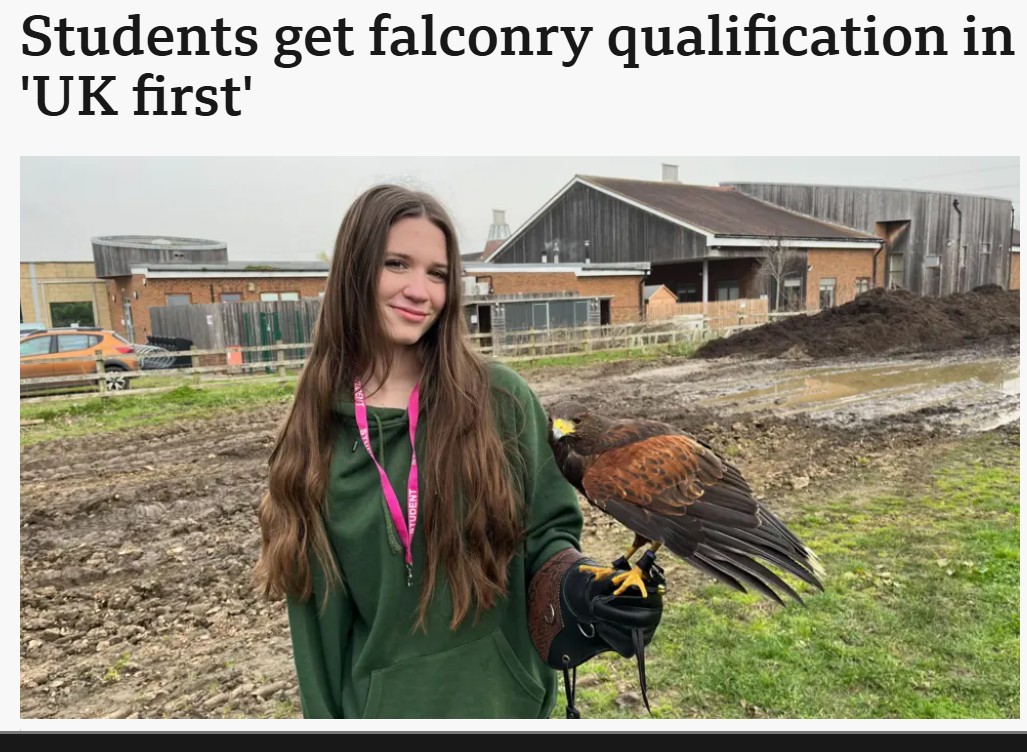
Raptor Awards is proud to announce that Hadlow College in Kent has become the first UK college to embed a Raptor Awards falconry qualification into a full-time study programme. This landmark partnership marks a major step forward in bringing accredited, welfare-focused training with birds of prey into mainstream education. Through this collaboration, Hadlow students work towards nationally recognised Raptor Awards certification, combining practical skills and theory skills which include topics such as bird of prey nutrition, housing, furniture (equipment), legislation, and free flying. This ensures that new entrants to the sector are not only confident working with raptors, but also trained to an independently assessed standard that employers understand and trust. This development demonstrates how the Raptor Awards framework can successfully underpin college and training-provider programmes, creating clear, work-ready pathways into roles in falconry centres, pest management, displays, and related fields. We look forward to supporting more education partners who wish to raise standards and professionalism in raptor care and management through accredited training. Hadlow College in Kent says falconry qualification is 'UK first' - BBC News
5th January 2026
Junior Raptor Awards is based on the Raptor Awards Combined Course on keeping, training and flying birds of prey, but is designed especially for younger learners. It focuses on safe behaviour around birds and understanding basic needs such as nutrition, accommodation, furniture and more, presented in a more digestible and friendly way. It is important that the younger generation comes into the world of birds of prey in the best way, with bird of prey welfare at the heart of everything they do. Junior Raptor Awards helps to achieve this by setting clear, age appropriate standards from the very start. The programme is endorsed by Jemima Parry Jones MBE, the United Kingdoms best known and most experienced falconer, raptor conservationists and educator. Hear what Jemima Parry Jones MBE has to say here.
11th November 2025
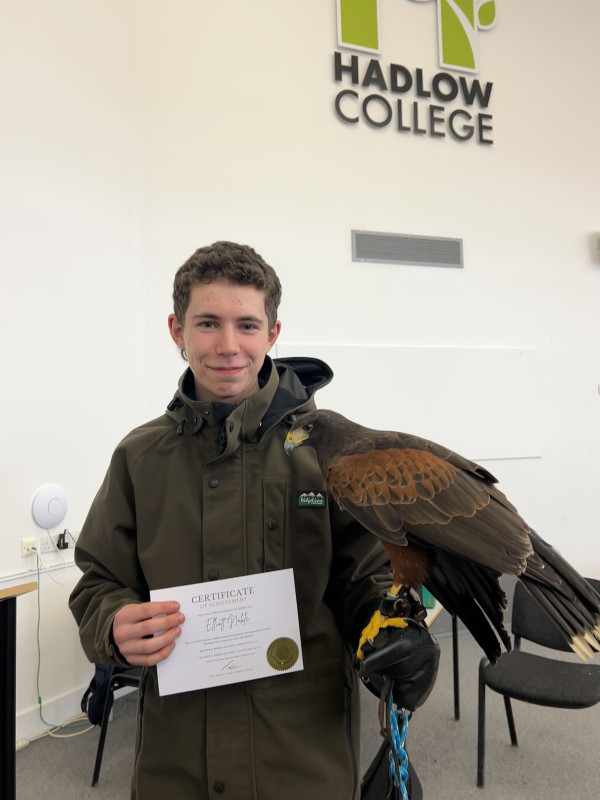
Raptor Awards delivers courses directly into colleges through lectures based on the Combined Course (C1-9), with both practical and theory elements covered during each session. Students attend for in-depth learning on keeping, training and welfare, then complete the full online course independently. This results in their ability to earn their official certification. This approach complements existing animal management programmes, equipping students with skills for the growing bird of prey sector. With few colleges offering such specialised content, it boosts employability while supporting our mission to raise welfare standards nationwide. We already partner with Hadlow College and North East Surrey College of Technology in delivering our course. Contact us to collaborate: admin@raptorawards.co.uk
2nd November 2025
Raptor Awards is proud to sit on the Hawk Board, aligning our work directly with this essential body. Raptor Awards works alongside and supports the Hawk Board in maintaining the highest standards of welfare for birds of prey, encouraging responsible falconry, and aiding good communication across the community. The Hawk Board is vital because it represents falconers interests with government, shapes legislation, and promotes best practices for all involved. By being part of it, Raptor Awards helps drive forward ethical, safe and best practise in the bird of prey community, as set out by the Raptor Awards Standards. To donate to the Hawk Board, visit their official donations page at https://www.hawkboard.uk/donations. They accept contributions from individuals, organisations and supporters to cover running costs, like legal advice, elections and coordinator salary, as most roles are voluntary. For more information on the Hawk Board click here: The Hawk Board
31st March 2025
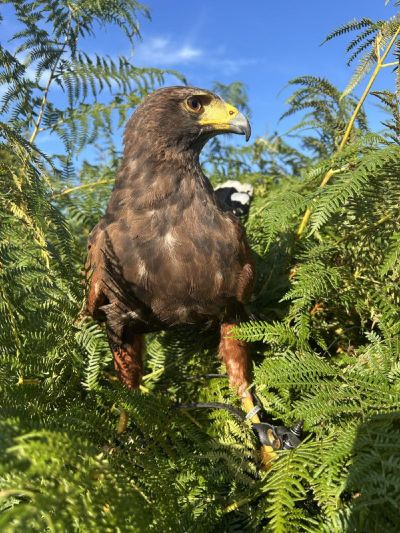
The New Combined Course Raptor Awards has released an updated version of its Combined Course for the bird of prey community. Building on the previous Combined Course, the revised syllabus keeps the same nine module structure but updates key health and husbandry content. One important change is correcting the outdated belief that freezing food reliably kills frounce or trichomoniosis or any other pathogens, and instead promoting current veterinary understanding and robust biosecurity as the basis for safe practice. Staying up to date is vital because new veterinary research regularly changes what is known about disease risks, treatments and safe husbandry, and advice that was once accepted can later be shown to be wrong. Using current information helps keepers avoid preventable illness, reduce suffering, and demonstrate that modern bird of prey management is responsible, professional and grounded in the best knowledge available today rather than habits from the past.
9th September 2021
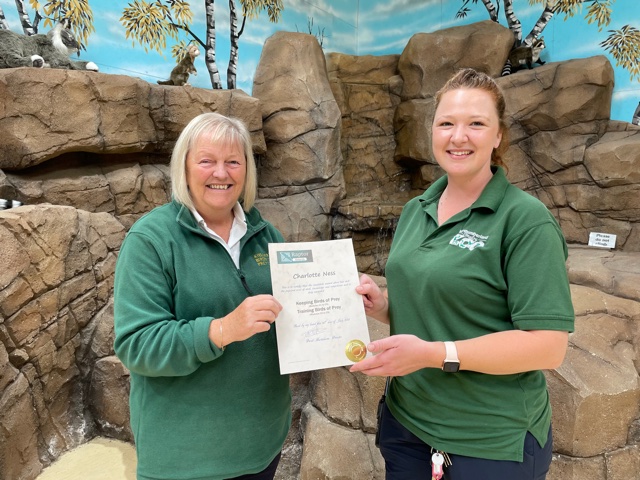
Seen here receiving her Raptor Awards Certificate, Charlotte Ness is full of praise for the support she received during her studies at the Kielder Forest Bird of Prey Centre. “I had an amazing experience” said Charlotte, “Ray and Cath treated me like family and were so supportive with the course work and all the practical side of things”. Charlotte, who works at Northumberland Zoo, is already putting her new-found skills and knowledge to good use in her falconry role. “We often receive good reports about the bird of prey courses offered by our national network of approved centres. It's a real pleasure to get such positive feedback. We wish Charlotte every success in her zoo-keeper role at Northumberland”, said Raptor Awards Director Derek Hartshorne. Kielder Bird of Prey Centre is one of Northumberland's top visitor attractions and has been an approved Raptor Awards Centre for many years. A steady stream of successful candidates have received their certificates over the years. Contact Ray or Cath Lowden for information about visiting and their full range of bird of prey experiences. If you visit Northumberland Zoo look out for Charlotte as she works with their birds of prey.